“Mentoring is a process which brings societies and civilizations to prosper and grow. Without it they will wither and die.”
David M. Corbin
I think that most people don’t get what mentoring really is.
For many years, I’ve been known as the “mentor to mentors”. People say, that’s pretty cool that you mentor mentors. And they leave it at that. They don’t inquire as to just what mentoring is or how the mentoring process really works and benefits. They just assume they know and it moves on where they’re impressed by me and I realize that they simply don’t have a clue as to what it’s all about except perhaps at a very simple or cursory level.
From my view:
Mentoring, from my perspective is a covenant between two people. It’s a relationship that usually develops between an older professional, the mentor, and a younger colleague, the mentee (or as I prefer to call the protégé) who wants to gain wisdom and knowledge from the mentor. While that’s true, I believe the mentor is much more then just an “older professional” who is going to impart this wisdom. The covenant that I refer to works from a very deep level — dare I say a spiritual one. Both parties agree to only honest and open communications, to fulfilling agreements and commitments and, eventually, to a timeline which will establish an end point or transition point. My view is that the mentor comes into the life of the protégé a the right time and for the right reasons- usually for the purpose of sharing from a deep well which is filled with experiences, ideas, principles and associations, which are being transferred to the protégé through the mentor for the purpose of their achieving their greatness. Thus, I look at the mentor relationship is a part of evolution of all stakeholders.
Because today’s knowledge and skill requirements are larger than ever, shortcuts are essential.
Recently, I’ve come to learn a contemporary word called ‘hack’. I had always thought ‘hack’ meant someone who does crappy work or one who uses a computer to gain an authorized access to data in a system. However, I’ve come to learn that, in addition to those definitions, it’s also an appropriate application of ingenuity. For example, we go to YouTube videos to find specific “hacks”. I recently searched YouTube for a “hack” on a particular problem I had with my vintage jaguar automobile. I found someone in the Midwest who had the same issue and videotaped the short cut solution … the hack. And viewing this hack saved me a lot of time and money. A short time later, I did the same thing when my washing machine wasn’t working properly. I searched and found the appropriate hack online and easily and quickly applied the solution. I love my hacks- these “appropriate applications of ingenuity” which, through the experience of others, compresses our learning curve and brings us to faster, easier solutions.
Mentoring is a series of hacks…. and more.
However, I believe mentoring is on a higher magnitude than mere ‘hack sharing’ because of the important covenant- the deep commitment the protégé’s development- on both parts.
Mentoring happens at the speed of trust.
Confidentiality and honesty are the substrate of the quality mentoring relationship. Part of that substrate includes clear expectations roles and goals and even the “what ifs” conversation.
Specific tips for mentors, from my experience and my heart include the following:
-
- Listen, observe, read, and evaluate what is being shared with you.
-
- Know thy self — “to thy known self be true”. Understand your deepest motivation in mentoring in general… and mentoring this person specifically.
-
- Evaluate internally what you are willing to do and what you’re unwilling to do in this mentoring relationship. For example how much time you’re willing to share, resources, how direct and confrontational you’re willing to be, how patient, etc.
-
- What are your expectations of the protégé?
-
- Know that your objective is not to clone yourself but rather to offer yourself, your wisdom, guidance and resources in a way that fortifies your protégé and creates an environment for them to become their best-actualized self.
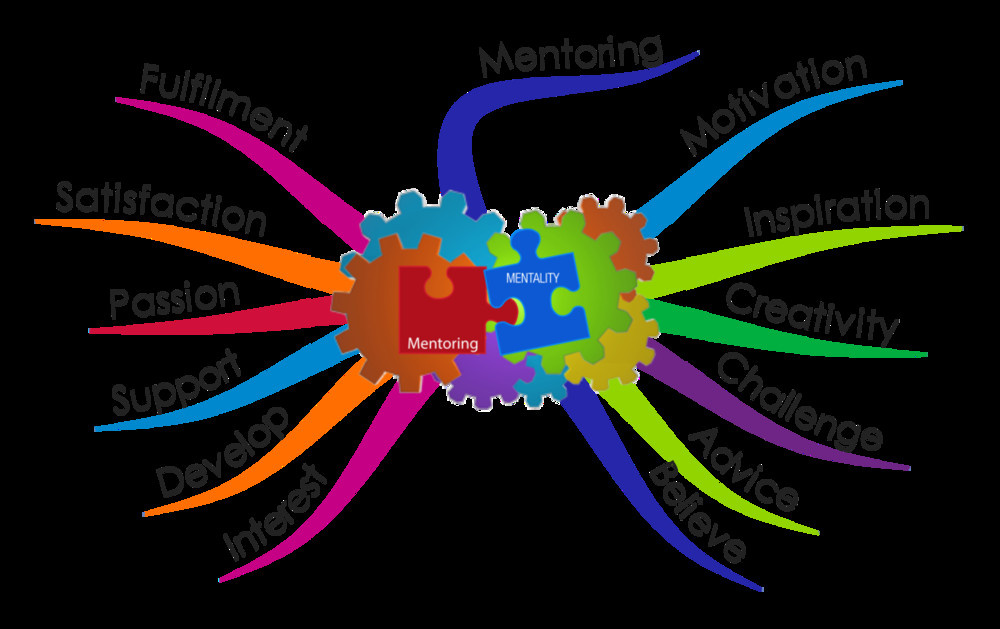
That is the heart of the Mentoring Mentality.
Never take Mentoring lightly. Ever.
Earlier on I mentioned the importance of clarity of expectations, roles and goals. Much like the Latin phrase “caveat emptor” which means “buyer beware” I found that the correlating value is in the Latin phrase “caveat vendidor” or “seller beware”. I refer to this to this in the context of mentoring because when you engage in a mentoring relationship with a protégé who is not clear on her expectations, responsibilities, and your requirements then you are in for an enormous headache. The wrong mentor/ protégé relationship really sucks. I say that because it can become a sustained form of annoyance, pain and existential angst. So what I’m suggesting is to engage carefully in your mentoring relationships. Each one is unique. Be certain that you are both in sync with your expectations, requirements and have covered as many bases as possible to ensure a mutually fulfilling and beneficial relationship.
I was asked recently on a radio interview how long the mentoring relationship lasts. Having never been asked that question I was forced to take a moment and quickly reflect on some of my most meaningful mentoring relationships and came to realize that they were all rather long – lasting over 5 years and some over 10. I then realized that mentoring never truly ends; that mentoring relationships last for a lifetime in one form or another. Now, does that mean that you make yourself available for an hour or two or five or ten per month? Of course not. However I found that those that I have mentored, would occasionally drop me a line with a question or to share a win or, quite often, to introduce a potential protégé. And I want to point out that in my mentoring world my protégés have often become lifetime friends … at different degrees of friendship: from acquaintance to “chosen family” (I was honored to be ‘best man’ at a couple of protégés weddings!) And, for me, it’s easy to work with the occasional correspondence from my protégés because I am already “logged on” to who they are, what they’re doing and how they do it. So it’s relatively easy for me to help. Don’t get me wrong, I have colleagues who approach it very differently and feel that when they have concluded their mentoring relationship then they no longer are willing to accept future requests for time and counsel. That’s great for them – but I choose to do it differently. If you are becoming a mentor it’s important that you ask yourself where you stand on this issue.
Mentoring is BIG stuff.
So there are a few ideas on “the Mentoring Mentality” from someone who has enriched his life immeasurably by being a mentor and “mentoring mentors”. Is mentoring for every one? Possibly not. There are subject matter experts in all fields who, in my opinion, should never, EVER, become mentors because, while they have the expertise they don’t demonstrate the altruistic heart to serve and support the protégé in that “selfless” mentality of service and love. And while that seems like judgment, and it is, it’s not a condemnation so much as my observation. The mentor is carrying and unpackaging information, knowledge, and associations that (and here comes my ‘woo woo’ side) are “meant for” the protégé. I know… this is getting metaphysical and mystical here and I make no apologies because I firmly believe that the mentor is an active and passive medium who is instrumental in the development and evolution of the human race.
With this mentality the mentor plays a vital role and that together humans will achieve and become so much more.
Namaste.